- Published on
Genesis AI Raises $500M Series A at $3.5B Valuation as Eno Heads Into Production
One tap, and our reporting appears more often in your Google Top Stories. It makes a real difference to a small newsroom.

Supported by RoboStrategySupport for Humanoids Daily comes from RoboStrategy
Sponsored
Investing involves risk, including possible loss of principal. Read the prospectus before investing.
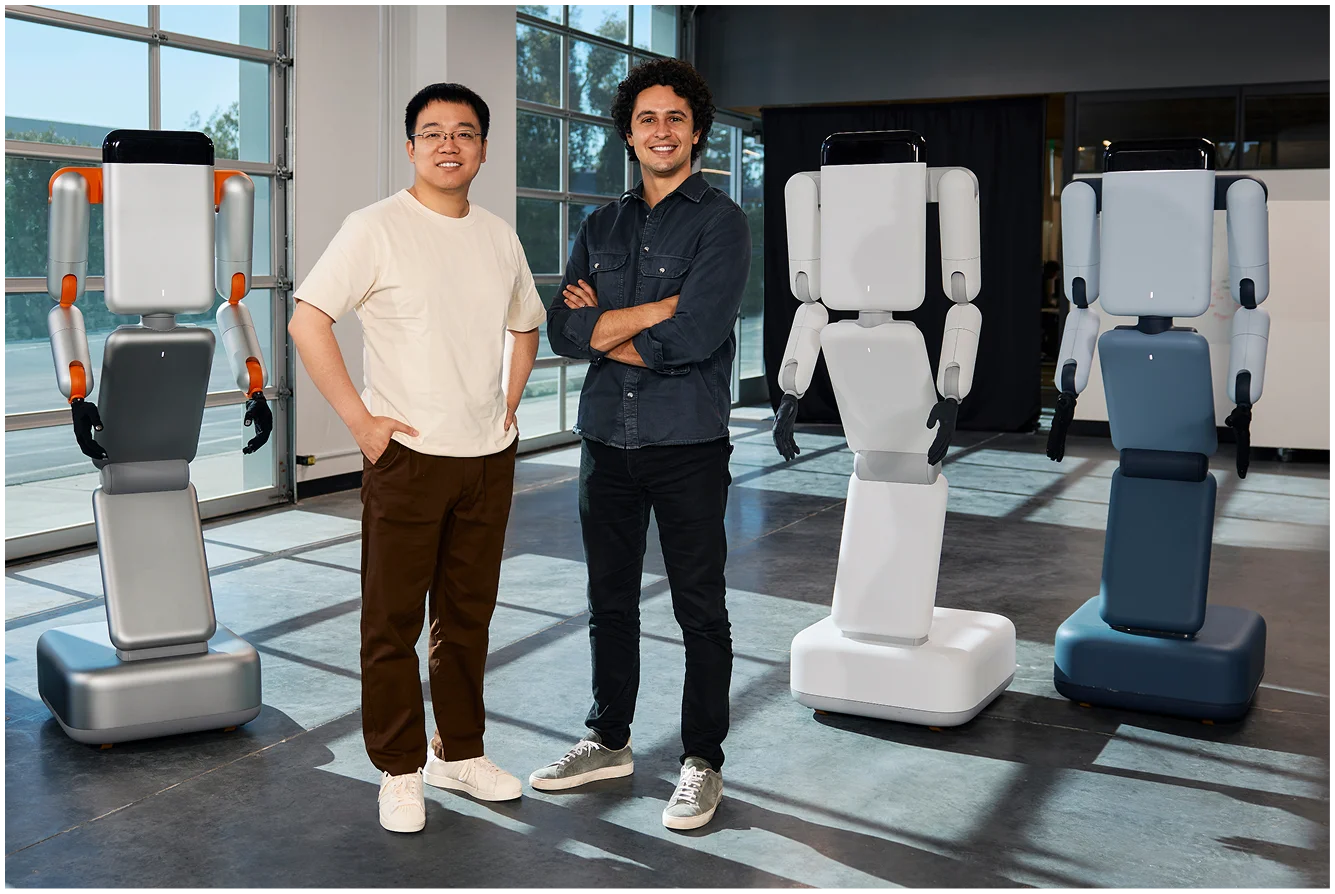
Genesis AI has raised $500 million in a Series A round at a $3.5 billion post-money valuation, the Paris- and San Carlos, California-based company announced on November 17. The round comes roughly a year after the company emerged from stealth with a $105 million seed round, and five months after it unveiled Eno, the wheeled, two-armed robot it now says it is ramping into production.
- Genesis AI has raised a $500 million Series A at a $3.5 billion post-money valuation, bringing its disclosed funding to about $605 million including its $105 million seed.
- Premji Invest, Khosla Ventures and Eclipse co-led the round. NVIDIA, AMD Ventures, Samsung Next, Ericsson, Zoom, T. Rowe Price-advised accounts and Bpifrance also took part, along with Eric Schmidt and former Tesla CFO Zach Kirkhorn.
- The company says it is ramping up production of Eno and will deploy it first in manufacturing, logistics and laboratories, then hospitality and healthcare, then consumer and outdoor settings.
- Genesis now describes itself as building the whole stack in-house, from hardware and controls to the GENE model, the Genesis World simulator and its glove-based data collection.
Who invested
Premji Invest, the investment arm of Wipro founder Azim Premji, co-led the round with Khosla Ventures and Eclipse. Khosla Ventures and Eric Schmidt, the former Google CEO, were already named as backers of the seed round.
The participating investors are Durable Capital Partners, accounts advised by T. Rowe Price Associates, French public investment bank Bpifrance, HSG, NVIDIA, AMD Ventures, Zoom, Samsung Next and Ericsson. Individual investors include Schmidt, Zoom CEO Eric Yuan, Yahoo! co-founder and former CEO Jerry Yang, French telecoms entrepreneur Xavier Niel and Zach Kirkhorn, Tesla's former chief financial officer.
Genesis did not break down how much each investor put in.
Follow humanoid robotics without following every announcement.
Get the week’s most important launches, funding and research—and why they matter—in one email from Humanoids Daily.
Once a week. Unsubscribe anytime.
Read recent issuesVedant Agrawal, a partner at Premji Invest, said the firm was persuaded by seeing Genesis robots complete long, multi-step tasks on their own at human speed. "Completing full tasks in real time, not just short clips, is what turns a robot into something a business can rely on," he said.
Where the money goes
Genesis lists four uses for the round:
- Expanding data acquisition and large-scale training to widen the range and complexity of tasks its robots can perform
- Reaching human-level manipulation across a full range of environments
- Deploying Eno at scale with customers
- Hiring more AI researchers, robotics experts and engineers
"We're working to build the world's best general-purpose robot, one that works reliably in the real world, day after day," said Zhou Xian, Genesis AI's co-founder and CEO. "That requires the intelligence, hardware, and everything that goes into training and testing the robots to work as one system. By building it all ourselves, we can obsess over every detail and improve the entire robot faster in one closed loop."
Eno moves toward production
When Genesis revealed Eno in June, it said production and the first targeted customer deployments would begin by the end of 2026, and it announced a multi-phase partnership with LG CNS to pilot the robot at LG operations in the U.S. The company now says it is "ramping up production" of Eno.
The rollout order is more specific than in June, when Genesis spoke of industrial sites first and "service industries and the home" later. Eno will go first to manufacturing, logistics and laboratories, then to hospitality and healthcare, and after that to consumer and outdoor applications. Genesis has not said how many robots it plans to build or named customers beyond LG CNS.
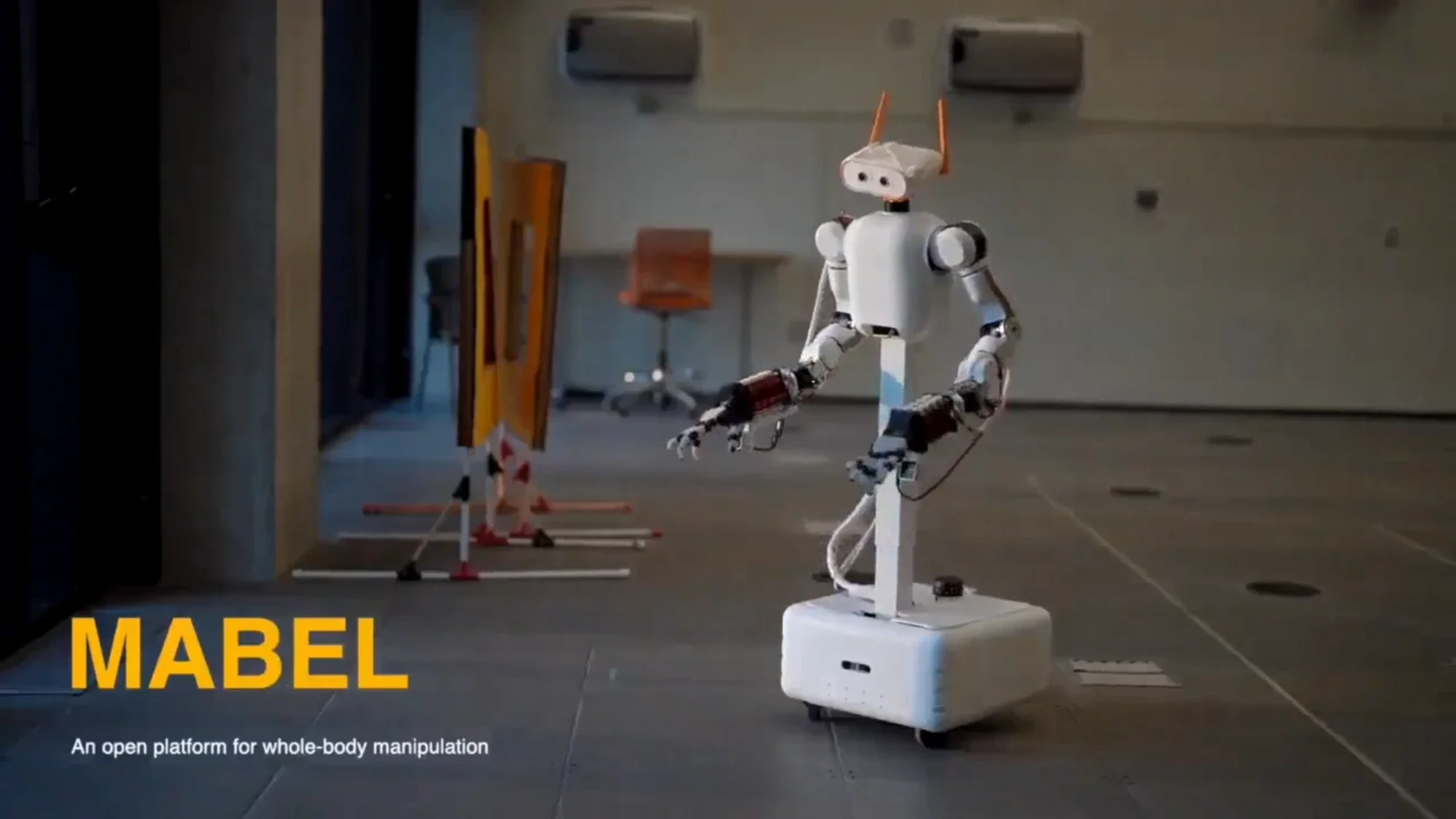
Eno rides on a wheeled base, with a column of articulated panels that lets it change height and fold away for storage. It has no conventional head; Genesis offers an optional chest-mounted screen that shows what the robot intends to do. The company describes the design as favoring "human capability over human appearance."
Building the whole stack
The press release puts weight on Genesis building every layer itself: hardware, controls, AI, data and evaluation. The company argues that once robots run whole workflows for months rather than single tasks, the system is only as reliable as its weakest part, and that owning each layer lets it avoid supplier constraints.
That is a change in emphasis from October 2025, when Zhou told Forbes the company was primarily focused on training the models and was working with vendors to produce custom machines. Since then Genesis has announced the pieces one by one:
- GENE-26.5, its robot foundation model, released in May with demonstration videos of long-horizon manipulation tasks
- A dexterous hand and data-collection glove designed so that the human hand, the glove and the robot hand map 1:1:1, letting the company train on data recorded while people wear the glove during their normal work. The hand was co-developed with Wuji Tech.
- Genesis World 1.0, the simulation platform used to train and test skills before they run on hardware
- Eno, the robot that carries all of it
In the company's description, human glove data trains GENE, Genesis World speeds up evaluation, and data from deployed Eno units feeds back into the model, the simulator and the hardware design.
"The next generation of robotics won't be built by improving hardware or AI models in isolation," said Vinod Khosla, founder of Khosla Ventures. Charly Mwangi, a partner at Eclipse, pointed to the team: "They far exceeded my expectations from a year ago."
Genesis has also been staffing up for the commercial phase. In May it hired Damien Kieran, formerly chief privacy officer at Twitter, as head of legal, and former Tesla and Amazon manufacturing executive Pally Kumar as head of operations.
Share this article
Follow humanoid robotics without following every announcement.
Get the week’s most important launches, funding and research—and why they matter—in one email from Humanoids Daily.
Once a week. Unsubscribe anytime.
Read recent issuesRead next
- Published on
- Reading time
- 5 min read
LG Signs With Korea's Robot Certification Agency to Safety-Test Its Humanoids
- Published on
- Reading time
- 8 min read
Foundation Misses Payroll After CEO Borrowed $4.6 Million to Buy a Home
- Published on
- Reading time
- 4 min read
J.P. Morgan Forecasts 300,000 to 400,000 US-Made Humanoids by 2030
- Published on
- Reading time
- 6 min read
HD Hyundai Robotics Builds Its Own Robot Brain, as Skild AI Pitches Korea on Building the Bodies
- Published on
- Reading time
- 2 min read
KIST’s KAPEX Humanoid Reportedly Uses Over 90% Korean-Made Core Components
- Published on
- Reading time
- 3 min read
LG Targets Home Humanoids Around 2030, With Robots and Appliances Designed to Work Together